Break the Tension: 1–7 Minute Stress Relief Resets

Break the Tension: Simple Stress Relief You Can Use in Minutes
Stress can show up as tight shoulders, racing thoughts, or a constant sense of urgency. Relief often comes from small, repeatable actions that settle the nervous system, reset attention, and protect time before it disappears. The techniques below are designed to work in real life—between meetings, during errands, or right before sleep—without special equipment. If you want a quick refresher on how stress affects the body, the American Psychological Association has a helpful overview.
Start by noticing the early signs of tension
Stress relief works best when you catch tension early—before it turns into a full-body “on edge” feeling.
Common body cues
Look for jaw clenching, shallow breathing, stomach tightness, headaches, restless legs, and sweaty palms. These signals often show up before you consciously feel stressed.
Common mind cues
Notice catastrophizing, looping thoughts, irritability, trouble prioritizing, or feeling “behind” even when you’ve been busy all day.
A quick reset rule
Reduce intensity first (body), then regain clarity (mind), then choose one next action (time). When you try to “think your way out” of stress first, the body often pulls you right back into urgency.
Breathing exercises that downshift fast
Breathing is one of the fastest ways to nudge your nervous system toward a calmer state. These options are short on purpose—easy enough to repeat when it matters.
Physiological sigh (30–60 seconds)
Inhale through the nose, top up with a second short inhale, then exhale long and slow. Repeat 2–3 times. This can reduce air hunger and soften a spike of panic.
Box breathing (2–4 minutes)
Inhale for 4, hold for 4, exhale for 4, hold for 4. Keep shoulders relaxed, unclench the jaw, and let the exhale stay quiet and controlled.
Extended exhale (2–5 minutes)
Inhale for 4, exhale for 6–8. Prioritize the longer exhale; it’s a simple cue for the body to downshift.
If dizziness happens
Shorten the counts, breathe more gently, and switch to nasal breathing without holds. The goal is steadiness, not intensity.
| Situation | Technique | How long | What to focus on |
|---|---|---|---|
| Sudden spike of anxiety | Physiological sigh | 30–60 sec | Long exhale, drop shoulders |
| Before a difficult conversation | Box breathing | 2–4 min | Even pacing, soft jaw |
| Can’t focus and feel wired | Extended exhale | 2–5 min | Slow exhale, steady rhythm |
| Trouble falling asleep | Extended exhale (no holds) | 3–8 min | Gentle nasal breathing |
Quick meditations for busy moments (1–7 minutes)
Short meditation is less about “emptying your mind” and more about interrupting autopilot. For safety and effectiveness notes on mindfulness, see the NCCIH guide to meditation and mindfulness.
One-minute “arrive” practice
Feel your feet on the floor, notice three sounds, then take five slow breaths. The point is to shift from mental speed to present-moment contact.
3-minute body scan
Move attention from forehead to jaw to shoulders to hands to belly. On each exhale, soften one area by even 5%.
Label-and-release (2–5 minutes)
Name the mental activity—“planning,” “worrying,” “replaying”—then return to breath or physical sensations. Labeling reduces the grip of the thought without arguing with it.
Micro-meditation between tasks
Before switching tabs or rooms, pause. Take one slow breath and decide the next single step. This prevents frantic multitasking from becoming the default.
Grounding techniques to stop spirals
Grounding brings attention back to what’s real and immediate—especially helpful when stress turns into a mental spiral.
5-4-3-2-1 sensory scan
Identify 5 things you see, 4 you feel, 3 you hear, 2 you smell, 1 you taste. Anchor in the room, not the story.
Temperature shift
Hold a cool drink, splash cool water, or place a cool cloth on cheeks/eyes for 20–30 seconds to interrupt escalation.
Name the present
Tension release
Time management tips that reduce stress at the source
Protect the “first next step”
Two-list method
Schedule buffers
Task batching
Boundary script
A simple routine to combine the techniques (morning, midday, evening)
Morning (3–5 minutes)
Midday (2–4 minutes)
Evening (5–8 minutes)
Try a short body scan, then write tomorrow’s List A to reduce bedtime rumination. If stress feels persistent or overwhelming, the NIMH coping with stress resource is a solid starting point.
Consistency beats intensity
A guided option for staying consistent
For a ready-to-use routine you can revisit anytime, explore Break the Tension: Stress Relief Techniques – Breathing Exercises, Quick Meditations, Grounding Techniques, and Time Management Tips to Reduce Stress.
Helpful tools that support calmer workdays
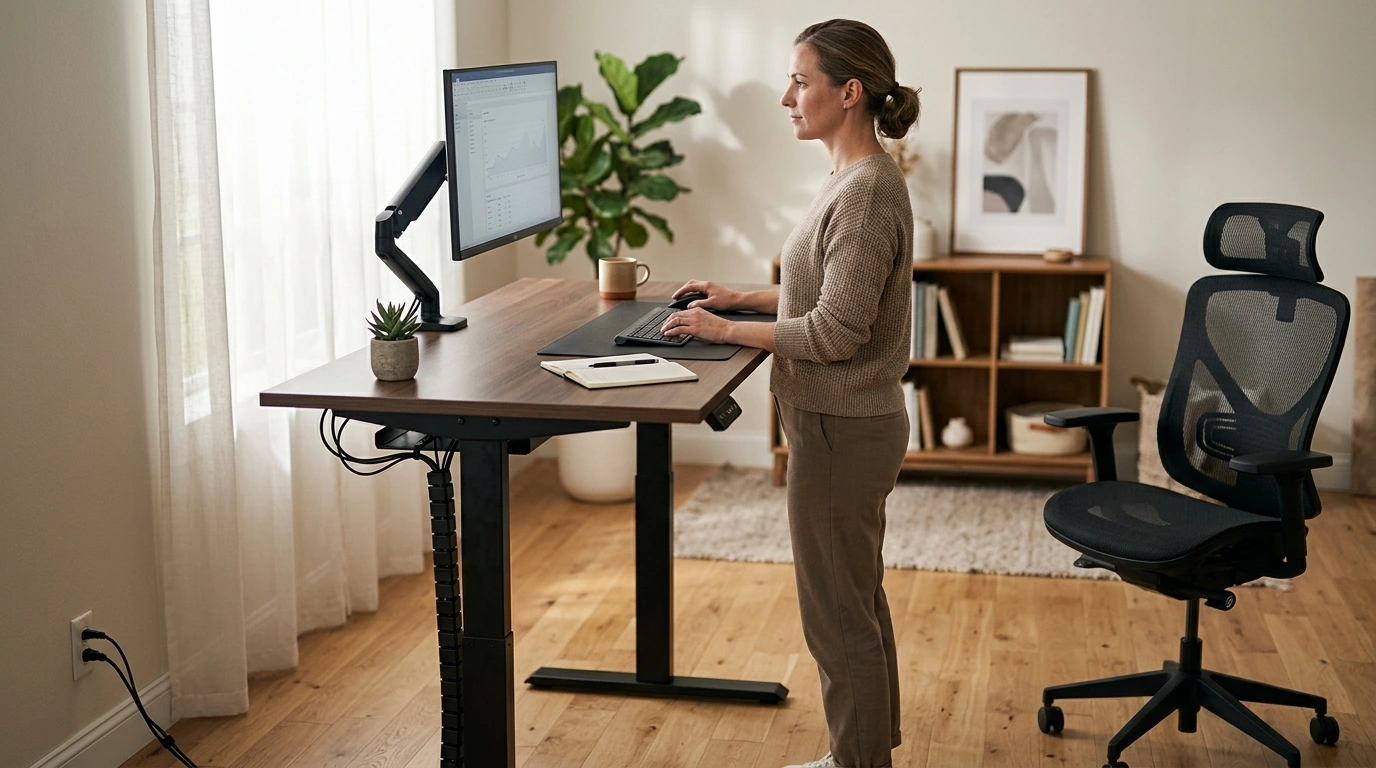
- Posture and movement support: If long sitting makes your body feel “locked,” consider an Electric Height-Adjustable Standing Desk to alternate positions and build mini movement breaks into the day.
- Sound to reduce distraction: For focus-friendly audio or guided breathing timers during short resets, Wireless Earbuds with Bluetooth 5.4, 75H Playtime, ENC Mic, IPX7 Waterproof can make the “calm choice” easier to start and repeat.
FAQ
What is the fastest breathing method to calm down?
The physiological sigh is one of the fastest: inhale through your nose, take a second short “top-up” inhale, then do a long slow exhale. Repeat 2–3 rounds, keeping the breaths gentle—if you feel lightheaded, shorten the inhale and soften the exhale.
How long should a quick meditation be to help with stress?
Even 1–7 minutes can help, especially when it interrupts spiraling thoughts and resets your attention. Three minutes is a realistic minimum for most people, and regular practice matters more than doing long sessions once in a while.
What if grounding techniques don’t work right away?
Combine grounding with a longer exhale, switch to a stronger anchor (cool temperature or pressing feet into the floor), and repeat for 2–3 cycles. If distress is persistent, severe, or getting worse, consider reaching out to a qualified mental health professional for support.











Leave a comment