Indoor Cat Enrichment: DIY Toys, Play Routines & Home Tips
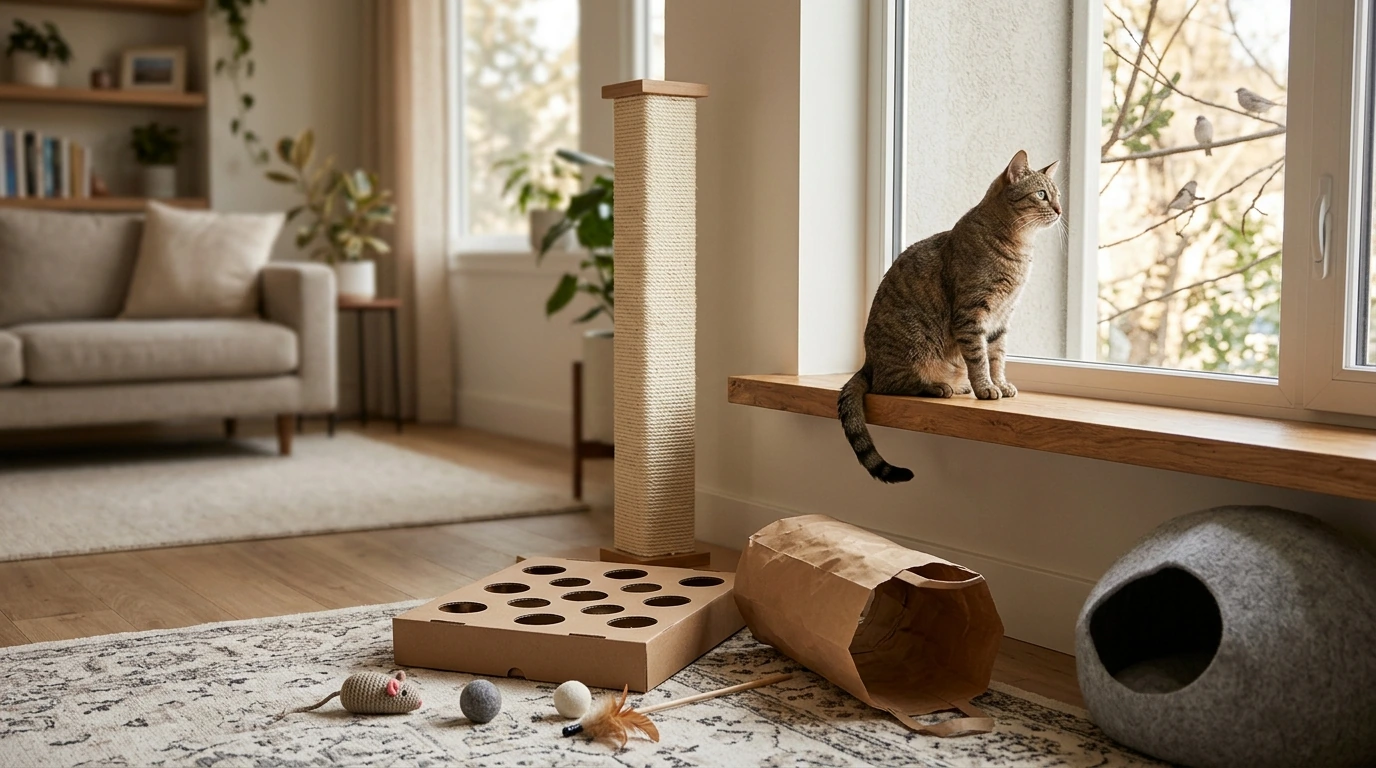
Indoor Cat Enrichment Made Easy: DIY Toys, Daily Play Routines, and Home Setup Tips
Indoor cats thrive when their days include hunting-style play, problem-solving, cozy rest zones, and safe ways to climb, scratch, and explore. A few smart changes to your space—plus short, repeatable routines—can reduce boredom behaviors and help your cat feel confident and settled.
If you want a simple way to stay consistent, the Printable cat enrichment guide with DIY toys, play routines, and home tips turns the ideas below into a one-page checklist you can keep by the food bin or toy drawer.
Why indoor enrichment matters (and what “enough” looks like)
Enrichment isn’t “extra”—it supports core feline needs: hunt, climb, scratch, hide, chew, observe, and rest. When those needs are met indoors, cats tend to be calmer, sleep better, and interact more gently.
- Common signs of under-stimulation: nighttime zoomies, constant attention-vocalizing, rough play, overgrooming, door-dashing, or food obsession.
- What “enough” often looks like: 2–4 short play blocks daily (not one huge session), plus passive options always available (scratchers, perches, hiding spots).
- Match the plan to the cat: kittens need frequent bursts; seniors often do best with gentler movement, traction, and predictable timing.
- Variety without chaos: rotate toys and activities to keep novelty high while keeping the environment itself stable.
For evidence-based environmental priorities, see the AAFP Feline Environmental Needs Guidelines and International Cat Care’s enrichment overview.
Set up a cat-friendly home: zones that invite natural behaviors
Think in “zones” so your cat always has an appropriate place to do the thing they want to do.
DIY enrichment toys from household items (safe, cheap, and effective)
Interactive play that actually satisfies the hunt cycle
Food enrichment: turn meals into a daily brain game
A simple weekly enrichment plan (printable-friendly routine)
| Day | Interactive play | Food puzzle | Home enrichment | Notes |
|---|---|---|---|---|
| Mon | Wand ‘mouse’ on floor (2×5 min) | Scatter feed in two rooms | Refresh scratchers | End with small snack |
| Tue | Feather ‘moth’ (3×4 min) | Box puzzle with 5–10 kibble | New paper bag hideout | Supervise if chewer |
| Wed | Kicker toy session (2×6 min) | Lick mat or slow plate | Window perch time | Quiet day for seniors |
| Thu | Hide-and-pounce wand (2×7 min) | Treat treasure hunt | Rotate solo toys | Increase ‘wins’ |
| Fri | Short sprint play (3×3 min) | Puzzle feeder (easy mode) | Add tunnel/box combo | Stop before overstimulation |
| Sat | Longer play (2×10 min) | Scatter feed + a few treats | Rearrange a shelf route | Check stability/anchors |
| Sun | Choice-based play (cat picks toy) | Light puzzle or hand-fed training treats | Laundry blanket scent swap | Review what worked |
Calm enrichment: training, touch, and confidence-building
- Clicker basics: reward eye contact, sit, target touch, and stepping onto a mat—high mental payoff with minimal running.
- Handling practice: brief, gentle sessions (paws, ears, mouth) paired with treats can reduce vet stress.
- Carrier as a hangout: leave it open with bedding and treats so it becomes a safe cave, not a trigger.
- Sound enrichment: some cats enjoy low-volume nature audio; always provide an opt-out quiet room. If you use audio while working, wireless earbuds can help keep sounds gentle for your cat while you stay focused.
- Routine over randomness: stable sleep and feeding times often reduce anxiety-driven behaviors.
Common problems and quick fixes
- Cat loses interest fast: shorten sessions, rotate toys more often, and add more hiding/pausing during wand play.
- Overstimulation (biting after play): reduce intensity, add more “wins,” and end earlier with food to bring arousal down.
- Nighttime zoomies: add an evening play + snack routine and ensure daytime enrichment isn’t too sparse.
- Scratching furniture: move scratchers to the problem spot, use double-sided tape temporarily, and reward scratching the right surface.
- Single-cat boredom when you’re busy: create an “activity lane” (window perch + scratcher + food puzzle) and rotate one element daily. If you work from home, an electric height-adjustable standing desk can make it easier to build quick play breaks into your day without rearranging your setup.
Printable guide: an easy way to stay consistent
- Use a one-page checklist to track daily play blocks, food puzzles, and toy rotation without overthinking it.
- Keep the plan flexible: swap activities based on energy level, weather, and household schedule.
- Choose 3–5 “core” activities your cat loves, then add 1 rotating wildcard for novelty.
- Place the printout near feeding supplies or the toy drawer. The Enrichment Ideas for Indoor Cats printable guide is designed for quick daily check-offs and weekly refresh reminders.
FAQ
How much play does an indoor cat need each day?
Most indoor cats do well with about 10–30 minutes total per day, split into short 3–10 minute sessions. Adjust based on age and health, and end the last session with a small meal or treat to help your cat settle.
What are safe DIY cat toys and what should be avoided?
Safe DIY toys use sturdy paper, cardboard, clean fabric, and cat-safe scents, with supervision for anything that can shred. Avoid leaving string, ribbon, hair ties, small swallowable parts, or fragile plastics out unattended, and replace toys as soon as they fray or break.
How can enrichment help with nighttime zoomies?
Evening hunt-style play followed by a small snack helps complete the hunt cycle and encourages sleep. Consistent daytime enrichment and a predictable routine also reduce the “all my energy saved for 2 a.m.” pattern.











Leave a comment