10-Slot Tool Organizer: Heavy-Duty Garage Wall Storage
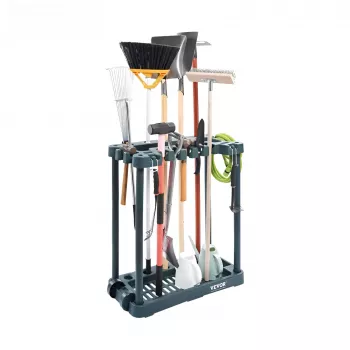
10-Slot Garden Tool Organizer for a Tidy, Heavy-Duty Garage Setup
A crowded garage or shed wastes time and damages tools when handles tangle and heads bang together. A sturdy wall-mounted organizer with fixed slots keeps long-handled tools upright, visible, and easy to grab—ideal for rakes, brooms, shovels, mops, and more. The payoff is simple: a cleaner floor, fewer dents and bent bristles, and a reliable “grab-and-go” tool zone that holds up through busy weekends and messy seasons.
What a 10-slot organizer solves (and what it doesn’t)
A fixed-slot rack is built for the tools that typically end up leaning in corners or piled behind bins. Moving those items onto the wall isn’t just about looks—it’s about keeping walkways clear and preventing tool damage.
- Reduces floor clutter by moving long-handled tools onto the wall, freeing up walking space and parking space.
- Prevents handle warp and bristle damage by keeping tools off the ground and separated from each other.
- Creates a consistent “home” for each tool so missing items are obvious at a glance.
- Best for long-handled tools; small hand tools typically still need hooks, bins, or a drawer system.
If the goal is a single, dependable station for everyday cleanup and yard work tools, a 10-slot layout hits a practical sweet spot: enough capacity for the essentials without encouraging overstuffing.
Common tools that fit well in the slots
Slots are ideal for straight or slightly tapered handles that can rest upright without twisting. Most garages can fill a 10-slot rack quickly once everything has a defined place.
- Yard tools: leaf rakes, garden rakes, shovels, spades, hoes, cultivators with long handles.
- Cleaning tools: push brooms, angle brooms, mops, dust mops, floor squeegees.
- Garage essentials: snow brush, shop broom, lightweight pole tools (as long as the handle diameter fits comfortably).
- Tip: group by frequency—daily/weekly tools in the easiest-to-reach slots, seasonal tools toward the ends.
Simple slot plan for a “no-tangle” wall
| Slot group | Suggested items | Placement tip |
|---|---|---|
| Everyday | Push broom, dust mop, mop | Near the door or cleanup area |
| Yard work | Leaf rake, garden rake, shovel | Near the yard/driveway exit |
| Seasonal | Snow broom, specialty pole tools | Higher or end slots to reduce traffic |
| Spare | Backup broom, extra handle | Keep one slot open to prevent overflow |
Where to mount it for best access and safety
Placement matters as much as the rack itself. The best location is the one that prevents dirty tools from traveling across clean areas and keeps handles from becoming a bump hazard.
- Garage wall: place near the main entry used for yard work so tools don’t cross the entire garage when wet or dirty.
- Shed wall: mount on a studded wall panel; leave clearance so tool heads don’t hit shelves or doors.
- Utility/laundry area: works well for brooms and mops; keep away from moisture-prone corners when possible.
- Height guidance: mount so tool heads clear the floor while handles remain reachable; leave room for taller tools.
A clear floor is a safety upgrade, not just a convenience. Basic housekeeping and keeping walking surfaces unobstructed is a widely recommended prevention step for slips and trips (see OSHA guidance on walking-working surfaces and the CDC’s fall prevention overview).
Installation checklist for a solid, wobble-free rack
A rack that flexes or wobbles becomes annoying fast—especially when you’re pulling out a shovel one-handed. A few minutes of planning keeps the setup feeling “built-in” instead of temporary.
- Locate studs or solid backing; avoid relying on drywall alone for heavy or frequently used tools.
- Mark a level line and pre-plan spacing so tool heads don’t collide (especially wide rakes).
- Use appropriate screws/anchors for the wall type (wood studs, masonry, or paneling).
- Test-load gradually: start with lighter tools, then add heavier ones to confirm stability.
- Leave a small buffer around the rack so tools can be lifted out without scraping adjacent items.
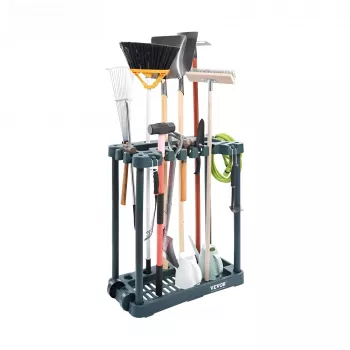
For an easy upgrade to an everyday storage zone, consider the 10-Slot Garden Tool Organizer – Heavy-Duty Garage Storage Rack for Rakes, Brooms & More.
Daily use: keeping the tool wall from turning into another pile
The best organizer is the one that stays organized in real life. The “system” should be effortless enough that anyone can return tools correctly without thinking.
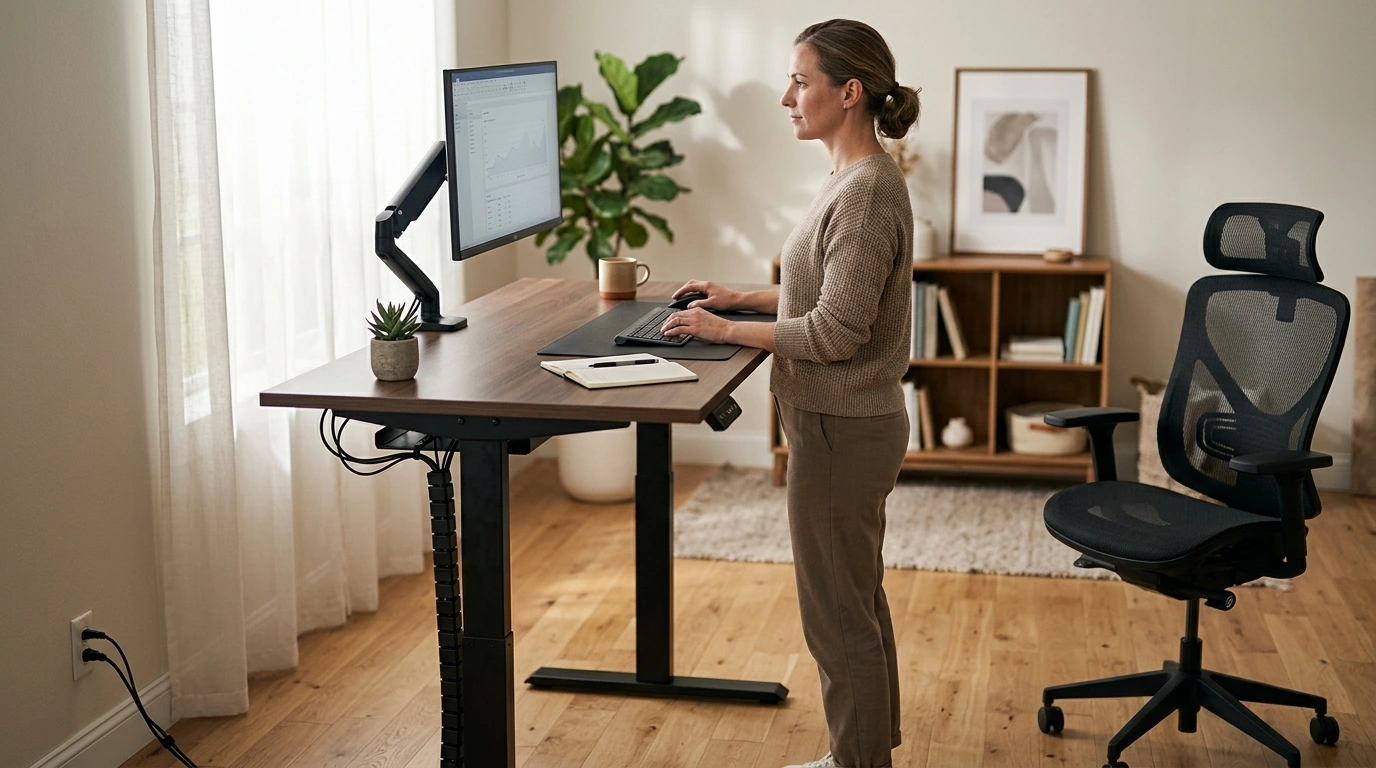
If the garage doubles as a workshop, a stable work surface can help keep projects from migrating onto the floor. An Electric Height-Adjustable Standing Desk can serve as a flexible bench for potting, small repairs, or tool maintenance.
Heavy-duty considerations that matter in real garages
For longer garage sessions—cleaning, organizing, or weekend projects—audio can make repetitive work easier to stick with. Wireless Earbuds with Bluetooth 5.4, 75H Playtime, ENC Mic, IPX7 Waterproof are a convenient add-on if you’re moving around and don’t want a cord snagging on tool handles.
A clean “zone” setup: what to add around the organizer
FAQ
Will it hold both rakes and brooms without tangling?
Yes—separated slots keep handles upright and spaced so heads don’t mash together. For bulky heads, alternate items (rake, broom, rake) and consider keeping one “buffer” slot open if your rake heads are extra wide.
Does it need to be mounted into studs?
For the strongest, most reliable hold, mounting into studs or solid backing is recommended—especially for shovels and metal-headed rakes. If you’re mounting to masonry or another solid surface, use anchors designed for that wall type and avoid drywall-only mounting for heavy tools.
How high should a wall tool rack be installed?
Install it high enough that tool heads clear the floor, but low enough that you can lift tools in and out without straining your shoulders. Leave extra clearance above and to the sides for tall handles and wide rake heads so nothing scrapes during removal.









Leave a comment