Self-Love & Worthiness: Guided Audio Meditations
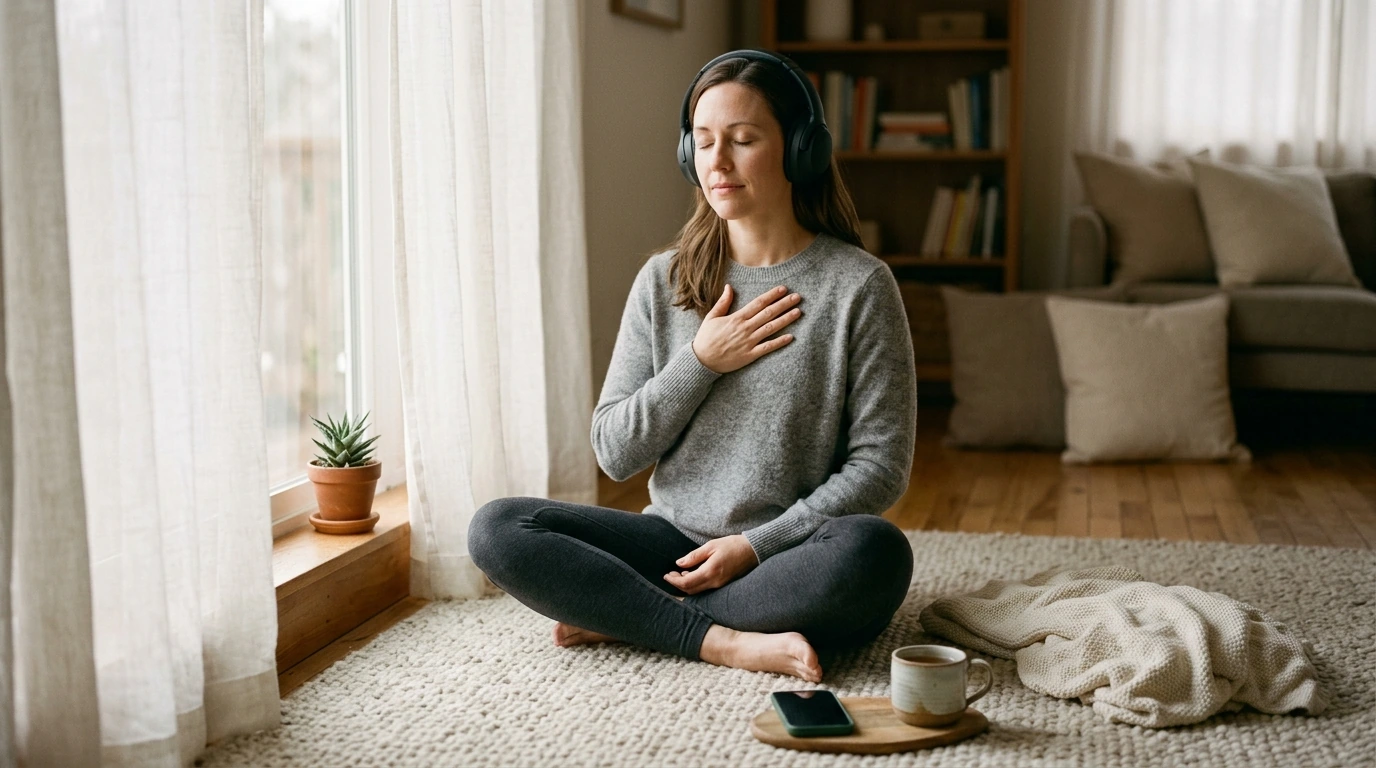
Meditations for Self-Love & Worthiness: A Gentle Audio Practice for Confidence, Calm, and Inner Healing
Self-love and worthiness can feel hard to access when the mind is loud, the body is tense, or old stories keep replaying. A structured audio practice can make it easier to return to steadiness—using guided meditations, affirmations, and mindfulness to build confidence, soften self-criticism, and create more calm in daily life.
Why self-love and worthiness can feel out of reach
When you’re under chronic stress, your nervous system can stay stuck in “on” mode—scanning for problems, tightening the body, and amplifying threat-based thinking. In that state, compassion can feel distant, not because you’re doing it wrong, but because safety is harder to feel.
- Chronic stress and nervous-system activation can make safety and self-compassion harder to feel.
- Harsh inner dialogue often grows from learned patterns, perfectionism, or past invalidation.
- Low worthiness can show up as people-pleasing, overworking, avoidance, or difficulty receiving support.
- Mindfulness trains noticing without merging with thoughts, creating space for kinder choices.
Mindfulness has also been widely studied for stress reduction; the American Psychological Association summarizes research on how meditation supports regulation and resilience (APA: Mindfulness meditation).
What an audio course adds beyond “trying to be positive”
Positive thinking can help, but it often fails when it becomes pressure—especially if your body is still bracing. Audio guidance creates a container: you don’t have to decide what to do next, and you’re less likely to default to your loudest inner critic.
- Guided structure reduces decision fatigue—press play and follow the cues.
- Affirmations paired with relaxation can help new beliefs land when the body feels safer.
- Short, repeatable sessions support consistency, which is often the missing ingredient.
- Mindfulness practices build awareness of triggers and the moment self-judgment starts.
For many people, the turning point isn’t “finding the perfect phrase.” It’s repetition in a calmer state—practicing the same skill until your system recognizes it as familiar.
How guided meditations support confidence, calm, and inner healing
Guided self-love meditations tend to work on three levels: attention, nervous-system settling, and emotional repair. Confidence becomes less about forcing certainty and more about returning to what’s stable in the moment—breath, posture, and the next small action you can control.
- Confidence grows when attention is trained to return to what is controllable: breath, posture, and present-moment actions.
- Calm improves through downshifting the stress response with slow breathing, body scans, and grounding cues.
- Inner healing is supported by meeting difficult emotions with compassion rather than suppression.
- Worthiness strengthens as the mind practices receiving warmth, safety, and kind language without “earning” it.
Self-compassion is a learnable skill; UC Berkeley’s Greater Good Science Center highlights how compassion practices can reduce self-criticism and support well-being (Greater Good Science Center: Self-Compassion). For a broader look at meditation types and safety considerations, the NIH’s NCCIH overview is a helpful reference (NCCIH: Meditation in Depth).
Common practice elements and what they build
| Practice element | What it helps with | When to use it |
|---|---|---|
| Breath grounding | Settling anxiety and racing thoughts | Before sleep, before a difficult conversation |
| Body scan | Releasing tension and reconnecting to the body | After work, after workouts, during overwhelm |
| Self-compassion phrases | Softening shame and self-criticism | After mistakes, when feeling “not enough” |
| Worthiness affirmations | Rewriting inner narratives over time | Morning routine, commute, before social events |
| Mindful noticing | Reducing reactivity and spirals | During triggers, when stuck in rumination |
A simple routine that fits real life
A practice only helps if it’s doable on your messiest days. Instead of aiming for long sessions, build a reliable baseline first—then expand if it feels supportive.
If your day involves a lot of desk time, consider using a short grounding session as a transition between tasks. Small posture changes, a longer exhale, and a relaxed jaw can shift the tone of your whole afternoon—especially when paired with an ergonomic setup like the Electric Height-Adjustable Standing Desk.
Using affirmations in a way that feels believable
Who this kind of practice supports most
To make the practice easier to keep, many people listen during low-distraction moments like a gentle walk or a wind-down routine. Comfortable audio can help here; the Wireless Earbuds with Bluetooth 5.4 are a simple option for consistent listening without being tethered to a device.
Meditations for Self-Love & Worthiness Audio Course: what to expect
Meditations for Self-Love & Worthiness Audio Course is an audio-based practice that combines guided meditation, mindfulness, and affirmations to support confidence, calm, and inner healing. It’s designed for repeat listening—because worthiness strengthens through steady exposure to kinder language, safer body cues, and consistent return to the present moment.
Quick details
| Item | Details |
|---|---|
| Format | Audio course |
| Focus | Self-love, worthiness, confidence, calm, inner healing |
| Price | USD 26.99 |
| Availability | In stock |
FAQ
How often should guided self-love meditations be done to notice a difference?
A practical cadence is 5–10 minutes daily or 3–5 times per week, with a two-week consistency window before you judge results. Many people notice changes first in stress levels, self-talk, and how quickly they recover from triggers.
What if affirmations feel fake or triggering?
Use “bridge” statements that feel believable (such as “I’m learning to trust myself”) and focus on safety and compassion before big confidence claims. Pair the words with a slow exhale and relaxed shoulders so your body isn’t fighting the message.
Can this be used for sleep and anxiety?
Yes—use it as part of a wind-down routine with lower light and fewer screens, and emphasize longer exhales to support calm. It can be a helpful complement for anxiety and sleep, but it isn’t a substitute for professional care when that’s needed.











Leave a comment