Cactus Floor-to-Ceiling Cat Tower: Setup & Tips
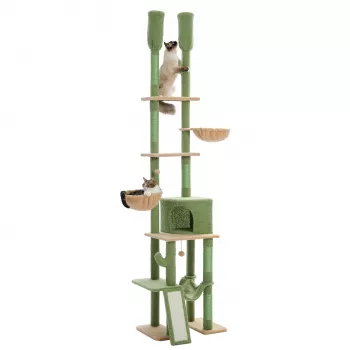
Cactus Cat Tree Floor to Ceiling Tower
A floor-to-ceiling cat tower adds vertical territory without taking up much floor space, giving cats a dedicated place to climb, scratch, perch, and observe. A cactus-inspired design can blend into modern décor while still providing the essentials cats look for: stability, grip, and multiple levels to rest or play.
What a Floor-to-Ceiling Cat Tower Adds to a Home
Indoor cats thrive when they can climb, survey a room, and move through space in more than one “lane.” A tall, braced tower turns unused vertical space into daily enrichment—especially helpful in apartments or smaller rooms.
- Creates vertical routes that reduce boredom and help indoor cats stay active
- Offers lookout perches that can lower stress by giving cats control over their space
- Keeps scratching and climbing behavior directed to one area instead of furniture
- Works well in small rooms because it uses height rather than wide bases
- Can help multi-cat homes by adding more “traffic lanes” and separated perches
For additional guidance on creating a cat-friendly environment, see the American Association of Feline Practitioners (AAFP) Environmental Needs Guidelines and the ASPCA’s cat care and enrichment resources.
Quick Product Snapshot
If you’re looking for a tall option that braces between floor and ceiling, the Cactus Cat Tree Floor to Ceiling Tower is designed to provide a secure, space-saving footprint with playful cactus styling. Placing it near a window or in a main living area helps ensure those upper perches become part of your cat’s everyday routine.
At-a-Glance Details
| Item | Details |
|---|---|
| Product | Cactus Cat Tree Floor to Ceiling Tower |
| Price | 86.51 USD |
| Availability | In stock |
| Product page | https://excellentpickstudio.shop/cactus-cat-tree-floor-to-ceiling-tower/ |
| Primary use | Climbing, perching, scratching, enrichment |
Choosing the Right Spot for Stability and Cat Traffic
Floor-to-ceiling towers are all about smart placement. A great spot makes the tower feel like a natural “cat highway,” while a poor spot can lead to wobble, underuse, or tension between pets.
- Place on a level floor; avoid thick, squishy rugs that can reduce stability
- Choose a ceiling surface that can handle bracing pressure; avoid weak tiles or damaged drywall areas
- Position near a window for natural “cat TV,” but keep cords and blinds out of reach
- Leave enough clearance so cats can jump on and off platforms without hitting shelves or picture frames
- If the home has multiple cats, place the tower where it won’t become a narrow choke point (hallway corners can trigger disputes)
A simple way to “test” the location before committing is to stand where the tower will go and picture jump arcs: base to mid-level, mid-level to top, and top to a nearby couch or windowsill. If any landing looks cramped, shift the position a foot or two.
Setup Basics and Safety Checks
Because this style relies on tension/bracing, setup matters as much as the materials. Take a few extra minutes to get it straight, snug, and re-checked after your cat has put it through real-life use.
- Follow the included instructions for the tension/brace mechanism and re-check after the first 24–48 hours of use
- Confirm the tower stands straight (no lean) and doesn’t wobble when pushed lightly from different sides
- Tighten hardware periodically; vibration from daily jumping can loosen fittings over time
- Keep the top bracing area clean and dry so it maintains grip against the ceiling
- If a cat is elderly, very large, or hesitant, add a small step stool nearby temporarily to build confidence
One practical routine: do a quick “two-hand wobble check” whenever you vacuum around it. If you feel movement, tighten before your cat decides to test it at full speed.
How Cats Typically Use a Tall Tower
Cats self-assign “jobs” to different levels: a lookout spot, a scratch zone, a launchpad, and a nap shelf. Understanding those patterns helps you encourage good habits early.
- Climbers and kittens: prefer rapid up-and-down movement; place a toy near the middle level to encourage safe play
- Shy cats: often claim higher perches to observe from a distance; avoid placing the tower where dogs can crowd the base
- Scratching-focused cats: look for consistent texture; reward early scratching with treats to build the habit
- Multi-cat dynamics: separate resting zones help; discourage blocking by adding an alternate cat bed elsewhere
- Nighttime activity: consider a soft rug at the base to reduce noise from jumping
Keeping It Looking Good (and Smelling Fresh)
Common Issues and Simple Fixes
When This Style Makes the Most Sense
More In-Stock Picks for Home Comfort
- Cactus Cat Tree Floor to Ceiling Tower
- Electric Height-Adjustable Standing Desk
- Wireless Earbuds with Bluetooth 5.4, 75H Playtime, ENC Mic, IPX7 Waterproof
FAQ
Will a floor-to-ceiling cat tower damage the ceiling?
Proper installation and correct tension are the keys to preventing damage. Place the top brace on a solid, clean surface, avoid fragile or compromised ceiling areas, and re-check for wobble so you can re-tighten as needed.
How tall does the ceiling need to be for an adjustable tower?
Measure your floor-to-ceiling height and compare it to the tower’s adjustment range listed on the product page. If your floor or ceiling is slightly uneven, factor that in and choose a level placement for the best stability.
Is a tall tower safe for kittens or senior cats?
It can be safe with a slow, supervised introduction and a very stable setup. Add an intermediate step (like a small stool) temporarily if needed, keep nails trimmed for grip, and let your cat’s confidence and mobility set the pace.










Leave a comment